Top Fintech Predictions for H2 2026
 Tomas Kauer - News Moderator
This year, the global fintech industry is witnessing significant developments, including infrastructure being built, institutional investors and corporates embracing digital assets, and artificial intelligence (AI) seeing surging interest.
These key developments are expected to continue impacting fintech funding activity in the second half of 2026, fueling investment in fintech infrastructure, stablecoins, and areas necessary for the realization of agentic commerce, according to a new report by KPMG.
These predictions are detailed in the firm’s latest Pulse of Fintech H1 2026 report, which offers insights into fintech funding activity during the first half of the year, highlights significant developments, and identifies trends to watch for the remainder of the year.
Infrastructure becomes a major investment priority
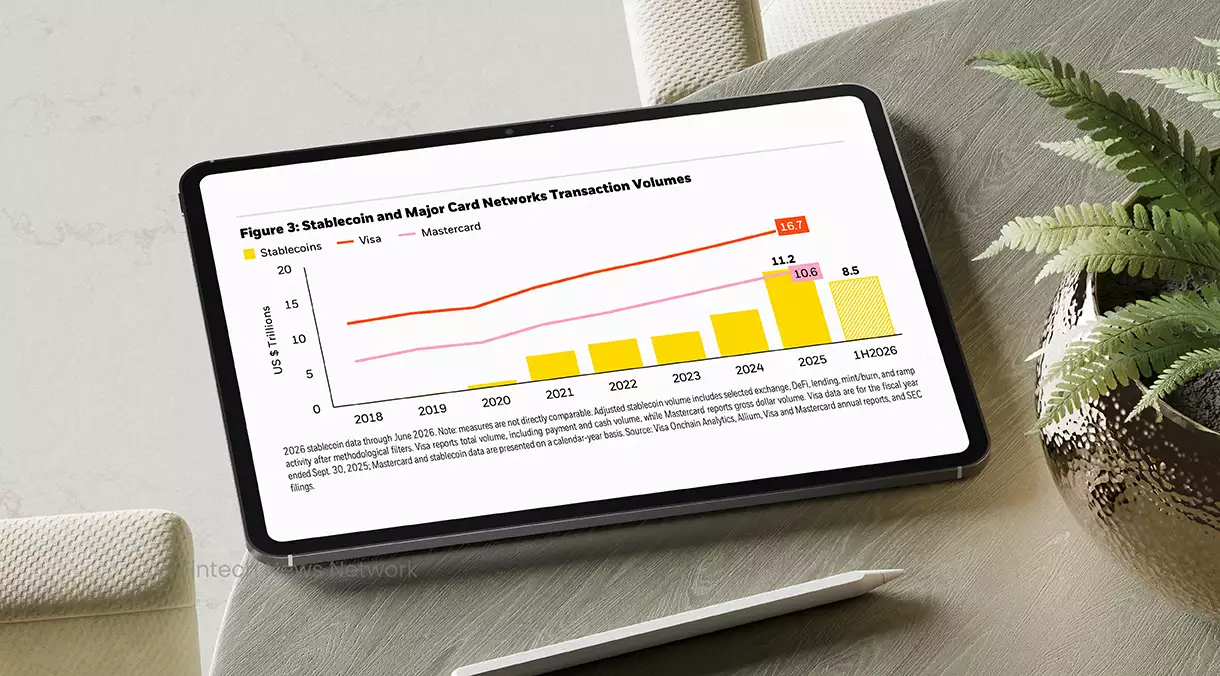
According to the report, infrastructure will become a major priority for investors in H2 2026, driven by growing focus on stablecoins and digital assets. This trend will build upon the robust fintech funding activity in the digital currencies sector during H1 2026.
One notable transaction was secured by Digital Asset, a provider of blockchain technology geared for financial institutions. In June, the firm raised US$355 million in a later-stage financing round led by Andreessen Horowitz’s crypto fund, a16z crypto.
Founded in 2014, Digital Asset is the creator of the Canton Network, a public layer-one blockchain network developed for financial institutions. The network counts among its members BNP Paribas, Capgemini, CBOE, Deloitte, and Deutsche Börse.
Interest in core infrastructure will also increase as traditional financial institutions seek to improve their systems to become more competitive and better protect their data and core operations. Recent investments in H2 2026 exemplify this trend.
In August, 10x Banking, a core banking platform serving some of the world’s largest financial institutions including Westpac and Chase UK, raised GBP 40 million (US$54.1 million) to expand its sales and go-to-market capabilities.
10x Banking offers a cloud-native software-as-a-service (SaaS) core banking platform designed to assist banks in modernizing their legacy technology, reducing operational complexity, and accelerating the launch of new products.
Over the past year, the company claims it has achieved significant milestones, including becoming EBITDA-positive, surpassing 10 million live accounts, onboarding over 10 new financial institutions, and witnessing an increase in annual recurring revenue (ARR) by over 30%.
Interest in AI strengthens
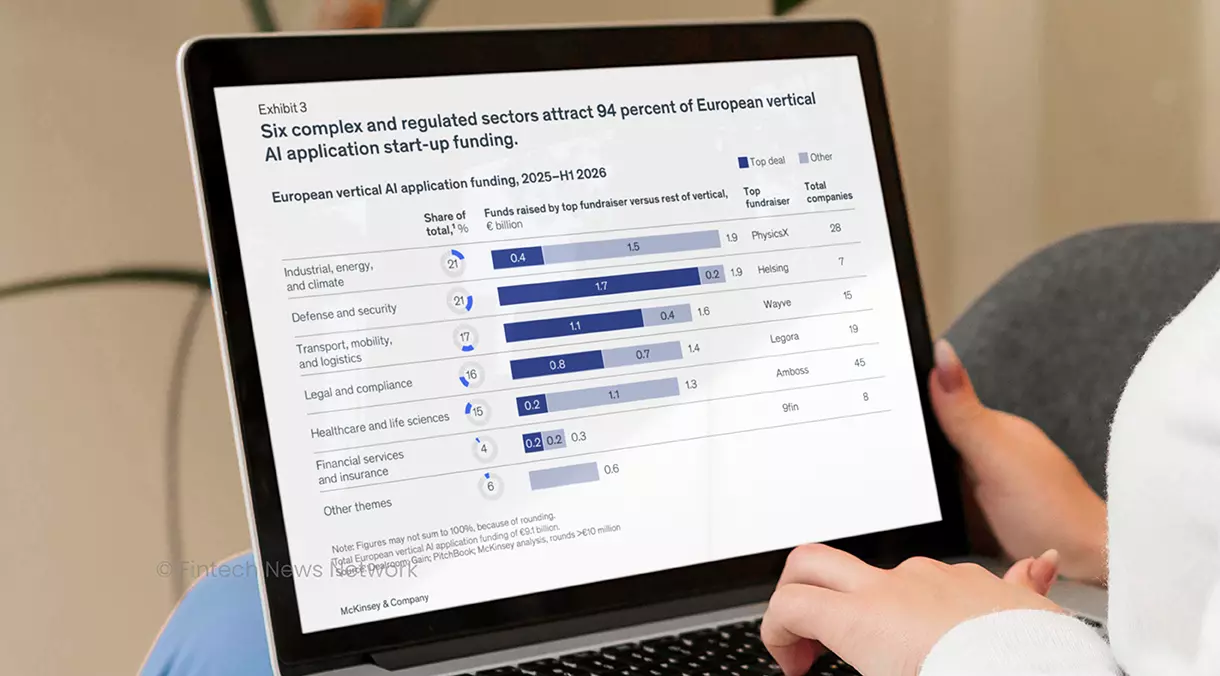
Another prediction highlighted by KPMG is the sustained interest in AI. However, as concerns about the cost of AI grow, the focus will likely pivot towards projects and investments in AI-native startups capable of demonstrating their ability to create values and which deliver unique propositions.
One notable investment in H1 2026 was the US$170 million Series C secured in March by 9fin, a startup that combines proprietary data, real-time analysis, and AI-driven workflows into a single platform to support credit professionals. The company, which claims among its customers more than 300 of the world’s leading law firms, banks, asset managers, and advisory firms, said it would use the proceeds to embed AI directly into core credit workflows and expand the proprietary data foundation that underpins its technology.
Investment activity in AI-native fintech startups carried on in the beginning of H2 2026. In July, Alpaca raised US$135 million to accelerate its agent-first brokerage and application programming interface (API)-first prime brokerage infrastructure. Its platform enables financial companies and institutional clients to build and scale investing products across traditional and on-chain markets.
That same month, Databento raised US$97 million in a Series B to expand across new asset classes and geographies while continuing to invest in its infrastructure. The company is also building out coverage in Europe and Asia-Pacific (APAC) and anticipates reaching over 20 data centers worldwide within the next six months.
Databento is a financial market data platform that provides real-time and historical data feeds from major global exchanges and trading venues through high-performance APIs. The company claims it has grown revenue 6.65x year-over-year (YoY) while maintaining 97% enterprise retention since inception.
Enabling agentic commerce
Agentic commerce will be another key theme in H2 2026. This trend will drive interest in a range of related areas, including cybersecurity and digital identity management, ensuring that agentic commerce transactions are approved, safeguarded, and well-protected from bad actors.
The trend was already evident in H1 2026, exemplified by the EUR 30 million (US$34.8 million) Series A secured by Duna, an identity fintech founded by Stripe alumni.
Duna is an AI-native business identity platform serving large banks, fintech startups, platforms and financial institutions, including Plaid, CCV by Fiserv, Moss, Bol and SVEA bank. Its goal is to build global trust infrastructure by providing a digital passport for every business.
Another recent round was secured in August by Socure, a trust infrastructure for global identity and risk intelligence. Socure is an AI-native trust infrastructure serving more than 3,000 customers and operating in 190 countries across financial services, government, gaming, healthcare, telecom, and e-commerce.
Socure closed Q2 2026 with US$364 million in total ARR, 63% YoY ARR growth, 133% net dollar retention, and 0.01% logo churn across more than 3,000 customers. The company claims international volume has grown from near zero to a double-digit share of Socure’s network in the past two years.
Payment solutions and infrastructure focused on agentic commerce are also likely to attract investment, as evidenced by recent deals in H2 2026. In July, Natural, a payment infrastructure for AI agents, raised US$30 million in a Series A.
Natural is building 13 products, including Wallets, a wallet designed for agents; Vaults, one-way accounts for agents to move money in; Pay, a feature for sending money to an agent, business or consumer; Request, a tool to collect money from an agent, business or consumer; Transfer, a feature to move funds between internal and external accounts; and Connect, a platform for building marketplaces on Natural. Natural is also rolling out Voice, Accept, and Cards over the coming months, and plans to launch Charge, Credit, Direct, and Billing in Q4 2026.
Payment vertical consolidates
In H2 2026, KPMG expects consolidation in the payment space to intensify as winners continue to make their presence known.
This trend will build upon significant acquisitions in the first half of the year. In January, Global Payments, a payment technology and software solutions provider, acquired payment rival Worldpay from FIS and GTCR. The combined company now serves more than 6 million merchant locations, processing US$3.7 trillion in payment volume and approximately 94 billion transactions annually across more than 175 countries.
More recently, in August 2026, Matercard purchased BVNK, a company providing infrastructure supporting fiat and on-chain payments. The acquisition will enable Mastercard to assist financial institutions, fintech startups, and enterprises in scaling use cases powered by stablecoins and tokenized assets, such as cross-border business-to-business (B2B) payments, payouts, settlements, and treasury flows.
Global fintech investment rebounded significantly in H1 2026, rising 42.8% between from H2 2025 to reach US$103.1 billion. The Americas continued to attract the largest share of fintech funding, with total investment of US$86.9 billion. In contrast, Europe, the Middle East and Africa (EMEA) saw fintech investment fall to US$11.3 billion, driven by geopolitical and macroeconomic uncertainties.

Featured image: Edited by Fintech News Switzerland, based on image by farknot via Magnific
The post Top Fintech Predictions for H2 2026 appeared first on Fintech Schweiz Digital Finance News - FintechNewsCH.