Digital Assets to Power Machine-Native Payments and Agentic Commerce
 Tomas Kauer - News Moderator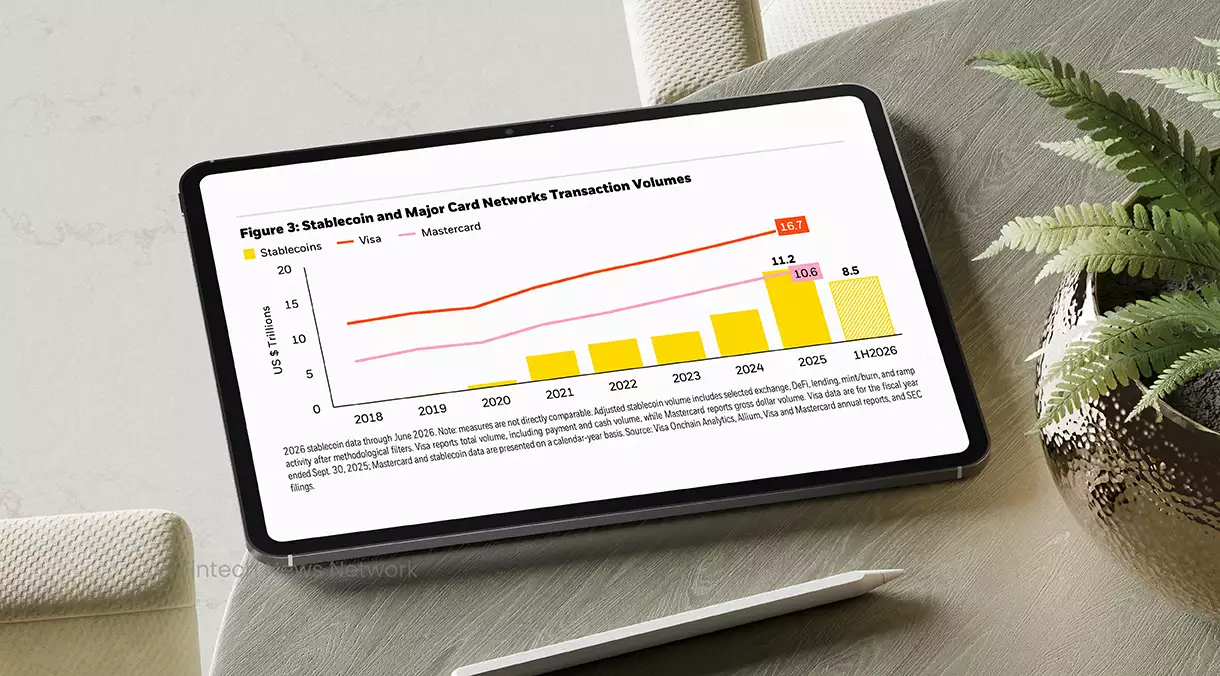
Blockchain and digital assets can provide the infrastructure and payment rails needed for agentic commerce and the AI economy to thrive, offering AI agents a more direct interface with programmable assets, and stablecoins supporting high-frequency, low-value, always-on transactions, according to a new paper by BlackRock, the world’s largest asset manager.
Agentic AI refers to systems that can plan and execute multistep tasks toward a defined objective. These systems interact with external tools and infrastructure with limited human intervention.
As AI agents become more capable and as their real-world applications expand, they increasingly demand payment and asset infrastructure designed natively for machine-speed commerce. Crypto-native blockchain rails are particularly well suited to high-frequency, sub-cent, machine-to-machine (M2M) transactions that take place around-the-clock, including API calls, on-demand data, and consumption-based compute, BlackRock argues.
Supporting the AI economy
Specifically, as AI risks and agents expand, compute will become a crucial economic input, prompting the market to build trading systems for pricing, financing, and hedging, the report says. While challenges remain around standardizing heterogeneous chips and regional energy costs, mechanisms like basis markets and on-chain tokenization offer solutions.
In particular, blockchain could serve four interconnected functions in this ecosystem. The technology can enable automated, machine-native payment rails where autonomous agents can settle transactions on a per-use, per-token, or per-job basis without human intervention.
On-chain tokenization also creates transferable claims on compute capacity that can be represented, transferred, and pledged as collateral through programmable smart contracts. This effectively turns compute into a liquid digital asset class.
Several protocols are emerging to address these needs. x402, for example, is an open payment protocol developed by Coinbase that aims to facilitate machine-initiated payments. The protocol is blockchain-agnostic, with stablecoins such as USDC representing an early primary use case, and is emerging as one potential standard for high-velocity M2M transactions.
x402 provides 24/7, near-real-time, verifiable settlement, and uses digital currencies, including stablecoins held in on-chain wallets, it can support high-frequency, low-denomination transactions without human intervention.
Stripe’s US$7 billion acquisition of OpenRouter in August 2026 further highlights the convergence of machine-native transactions and blockchain technology. OpenRouter helps businesses route and optimize token usage across 400+ models from more than 80 providers. Combined with Stripe’s payment infrastructure, this transaction points to a potential convergence between compute procurement, usage-based billing, and programmable settlement, supporting a future in which agents autonomously source and pay for compute over blockchains and other programmable payment rails.
Stablecoins to lead agentic commerce transactions
Though several types of digital assets may support agentic commerce, BlackRock stresses that stablecoins are likely to lead transactional use. Unliked cryptocurrencies like Bitcoin and Ethereum, these digital tokens are designed to maintain a stable value relative to a reference currency, most commonly the US dollar, providing a reliable unit of account and greater predictability in pricing and settlement.
Stablecoins currently form the largest category of tokenized real-world assets, with about US$300 billion in circulating market capitalization as of September 2026, according to RWA.xyz. Adjusted stablecoin transaction volume reached about US$11 trillion in 2025, rivaling Visa’s US$16.7 trillion and Mastercard’s US$10.6 trillion of transaction volumes.

Though agentic commerce remains nascent, this market is projected to expand significantly in the years ahead. Accenture forecasts that by 2030, more than 30% of online commerce could run through AI agents, representing close to US$3.1 trillion in transactions. This growth will be propelled by advances in AI agents, growing consumer adoption of AI, and merchants’ push to make purchasing faster and more personalized.
Improved digital payment infrastructure will further support this growth. In particular, agentic payments protocols and infrastructure are now emerging to enable AI agents to securely initiate, authorize, and complete transactions on behalf of users under predefined mandates and spending limits.
Standards such as the Machine Payments Protocol (MPP) are designed to standardize how AI agents request and authorize payments across the web, further accelerating adoption across the agentic commerce ecosystem. Co-authored by Stripe and Tempo, MPP lets AI agents make inline micropayments for APIs and services, establishing a programmable payment layer for M2M commerce.
Featured image: Edited by Fintech News Switzerland, based on image by Dhirgham via Magnific
The post Digital Assets to Power Machine-Native Payments and Agentic Commerce appeared first on Fintech Schweiz Digital Finance News - FintechNewsCH.